A five-card cross: define the position before the meaning
Use a center and four surrounding positions to separate the situation, background, development, support and challenge.
A five-card cross
This guide uses one stated position convention. Other readers may number or interpret a cross differently.
Center: the topic or situation under consideration.
A deliberately selected teaching example. The number beside each card name identifies the card; the layout numbers above identify positions.
A layout is an agreement about positions
Unlike a continuous line, this cross assigns a separate question to each location. Before placing any cards, write down the five roles shown in the diagram. The labels are a teaching convention, not a universal rule of Lenormand.
Use a single bounded topic, such as organizing a workshop. Position 1 stays in the center. Positions 2 and 3 sit to its left and right; positions 4 and 5 sit above and below. The numbers refer to positions, not to Rider, Clover or other numbered cards.
Read each location in relation to the center
First identify the central symbol and the topic it suggests. Read the left-center-right axis as background, situation and a possible development. Then read the upper-center-lower axis as support, situation and a challenge.
The position label constrains the question you ask about a card. A positive symbol below the center does not have to become negative: it might describe an attractive possibility that is difficult to organize or a resource you are relying on too heavily.
Worked example: preparing a workshop
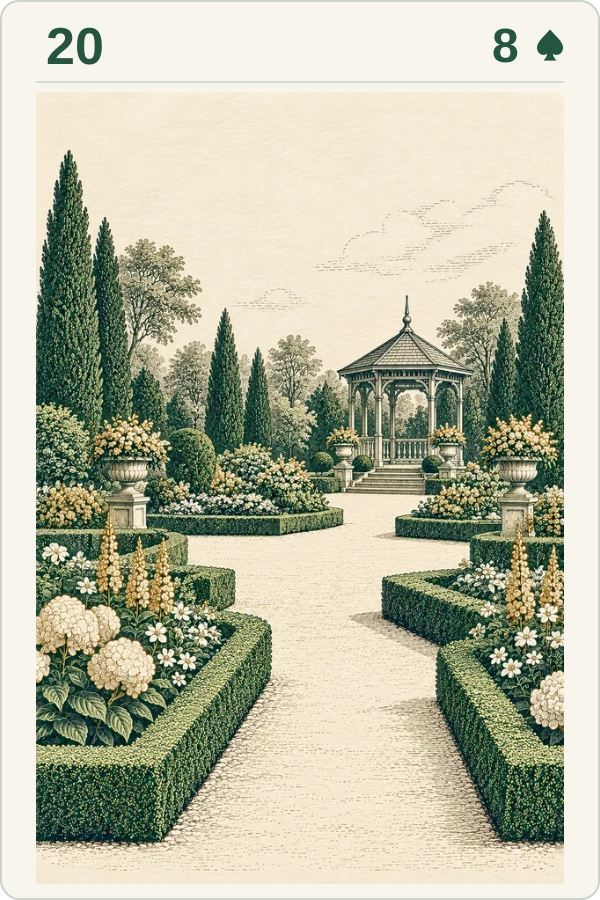
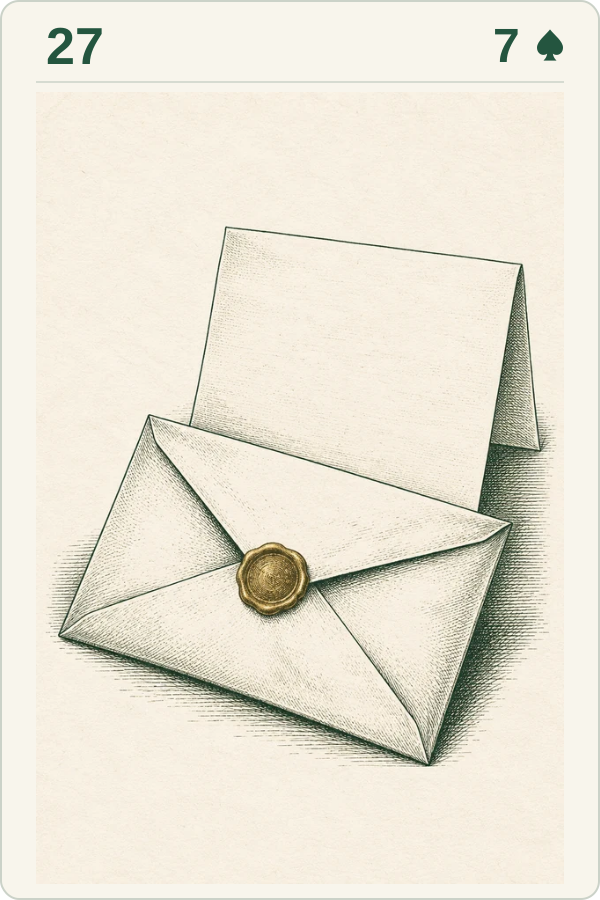
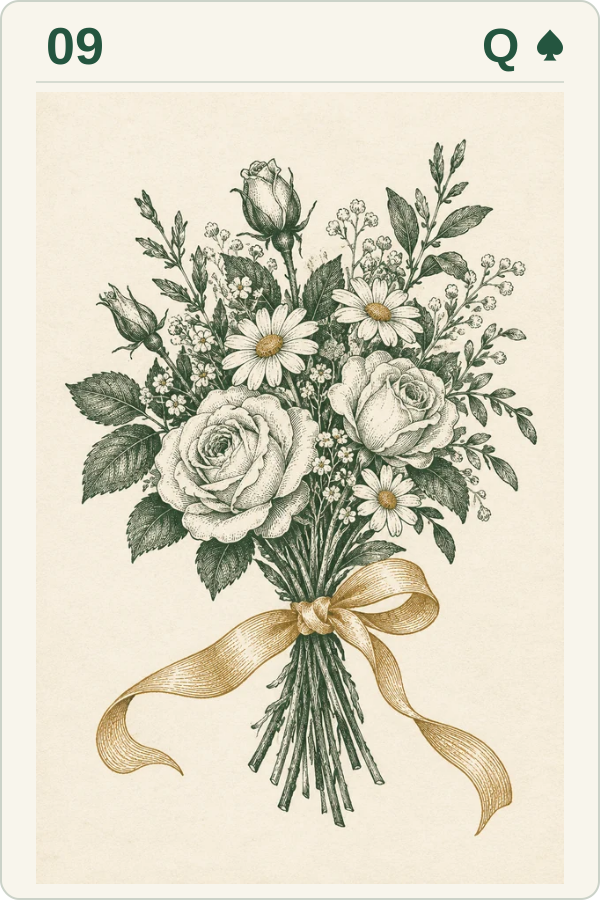
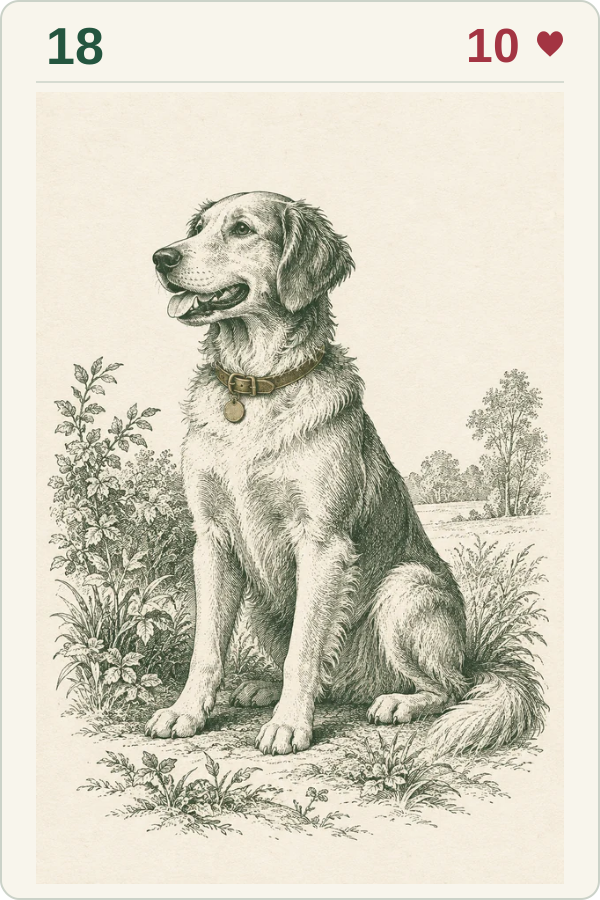
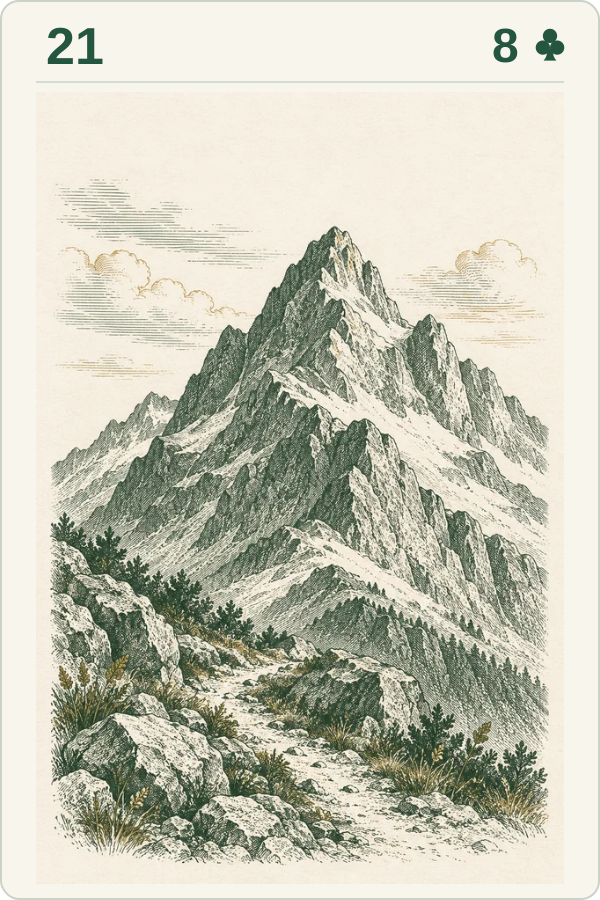
Place Garden in the center, Letter on the left, Bouquet on the right, Dog above and Mountain below. This teaching example starts with a group event. Written arrangements form the background, a welcoming invitation is one development to consider, support from a friend or colleague is a resource, and an obstacle needs attention.
Use the center with each surrounding card as a pair, while remembering its position role. A practical reflection could be: clarify the event information, ask a helper to review it and identify the actual obstacle before sending invitations. The cards do not establish what that obstacle is; confirm it from the venue, schedule or people involved.
Do not retrofit the rules
If you assigned the lower position to a challenge, do not rename it a guaranteed outcome after seeing the card. Keeping the original labels makes the exercise easier to compare with later notes.
A cross is useful for organizing perspectives. For practicing pure left-to-right combinations, use the line of five instead. Neither layout is automatically more accurate because it contains more interpretive layers.