The nine-card Lenormand spread: read a 3 × 3 portrait
Start with the center and frame, then explore rows, columns, diagonals and mirrors in a consistent order.
The nine-card portrait
Number positions 1–9 across the rows. Select a position to see its role in this teaching convention.
Center: the core theme or a deliberately chosen topic card.
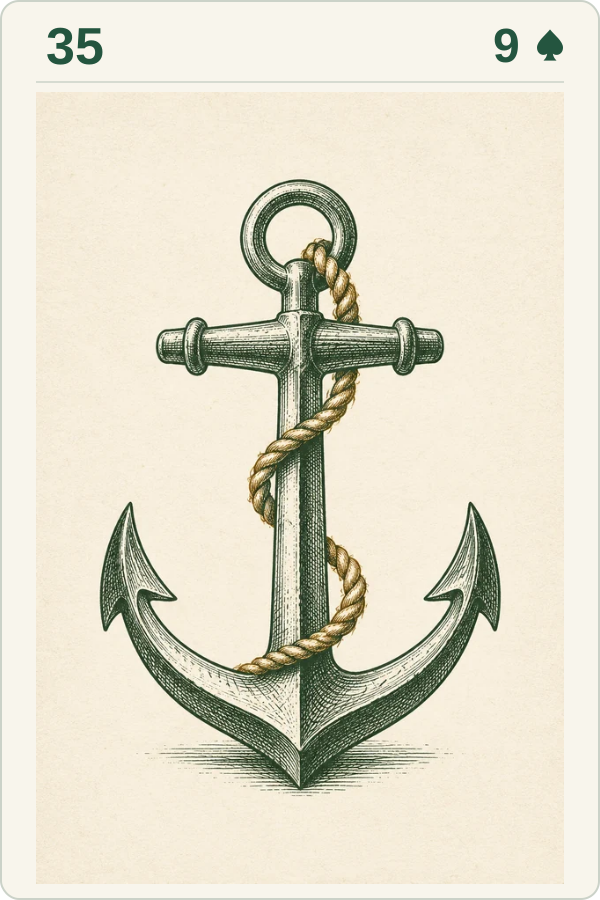
A deliberately selected teaching example. The number beside each card name identifies the card; the layout numbers above identify positions.
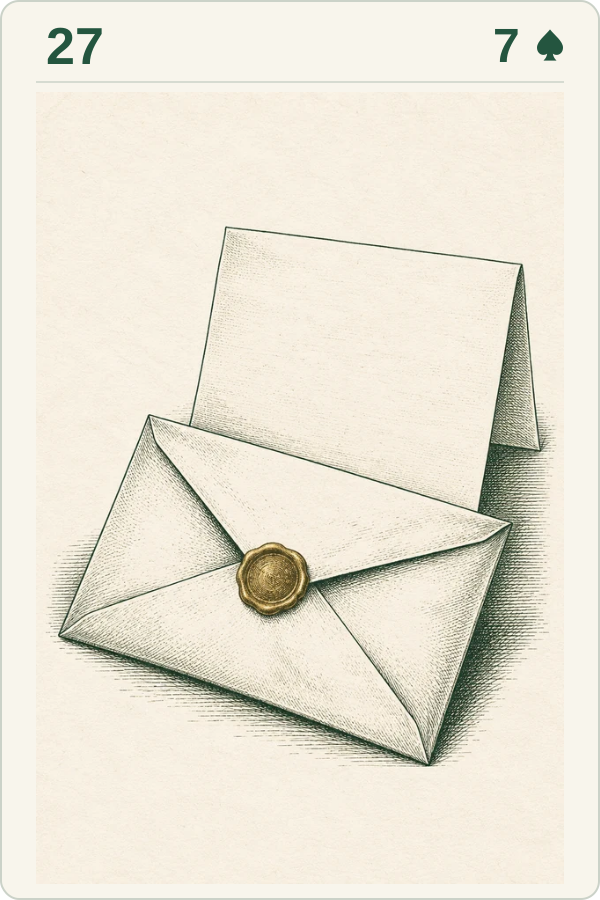
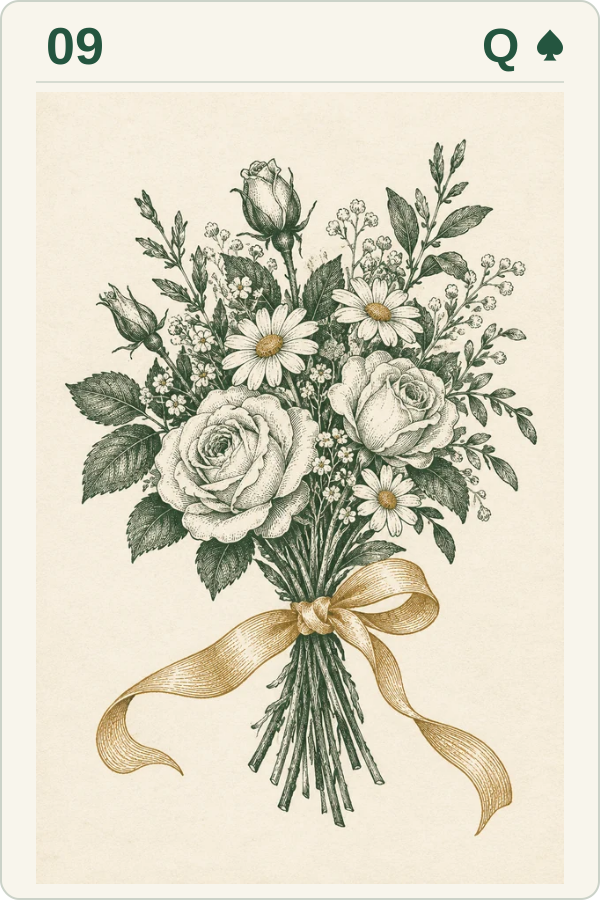
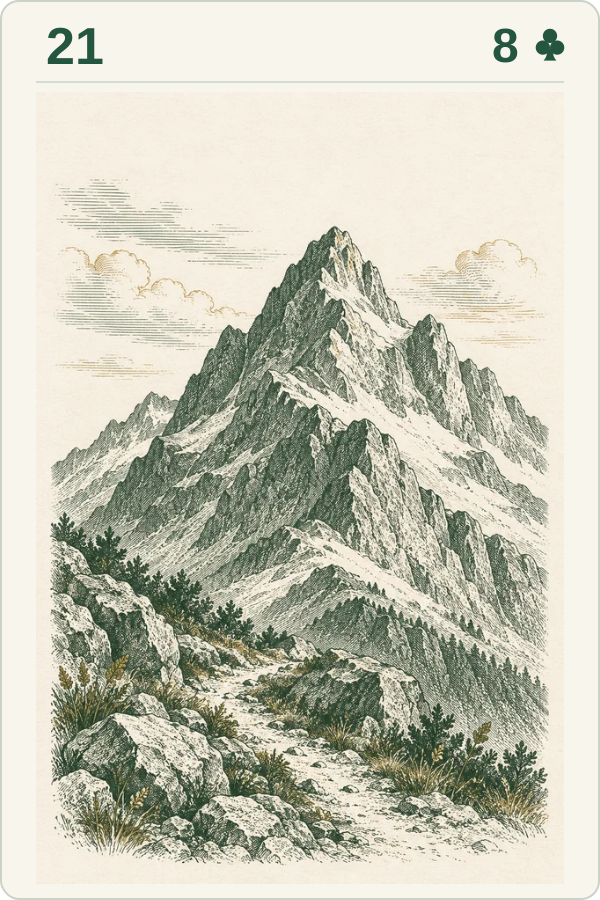
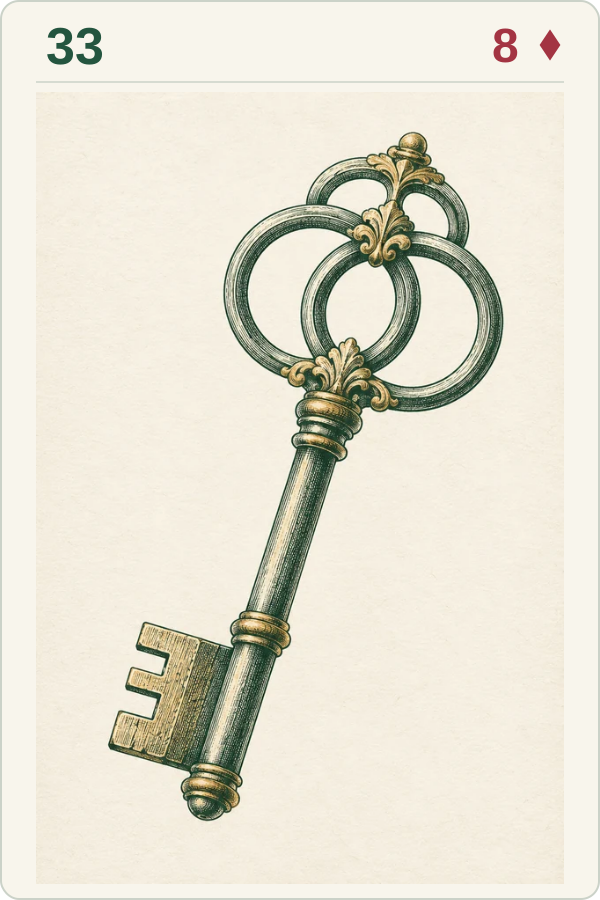
Start with the center and four corners
Lay nine cards in three rows of three. Position 5 supplies a central theme. It may be dealt with the other cards, or chosen in advance as a topic card; write down which method you use. A chosen center has not been randomly drawn and should not be presented as if it were.
Look at corners 1, 3, 7 and 9 to establish a frame. You can read the opposite corners as pairs, 1+9 and 3+7. Keep this initial frame brief; the neighboring lines will add context.
Read rows and columns under a declared convention
One convention treats the upper row as ideas or conscious concerns, the middle row as current circumstances and the lower row as underlying factors. Read 1-2-3, 4-5-6 and 7-8-9 as three-card lines. These are positional prompts, not objective facts about someone's unconscious mind.
Columns can provide another perspective: earlier context on the left, the present focus in the middle and possible developments on the right. This time convention is optional and should be declared before the reading. The layout does not establish an exact calendar date or an inevitable future.
Add diagonals and mirrors selectively
The two diagonals are 1-5-9 and 3-5-7. Both pass through the center, so they offer a way to revisit its theme. Horizontal mirrors are 1+3, 4+6 and 7+9; vertical mirrors are 1+7, 2+8 and 3+9.
There is no need to use every connection in one sitting. Start with the center and three rows, then add one technique if it answers a clear question. Too many overlapping readings make it easier to find a story that merely confirms what you already expect.
Worked example: communicating a small event
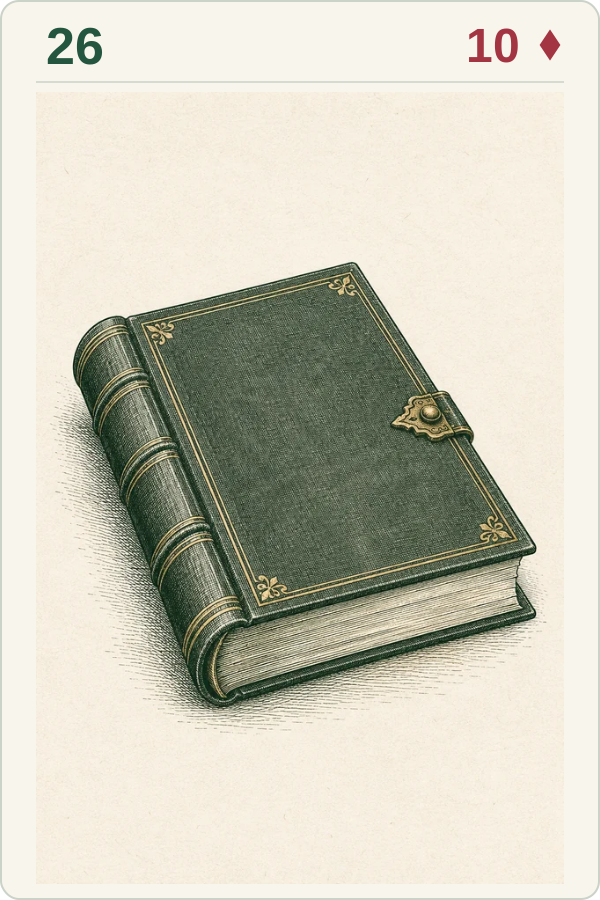
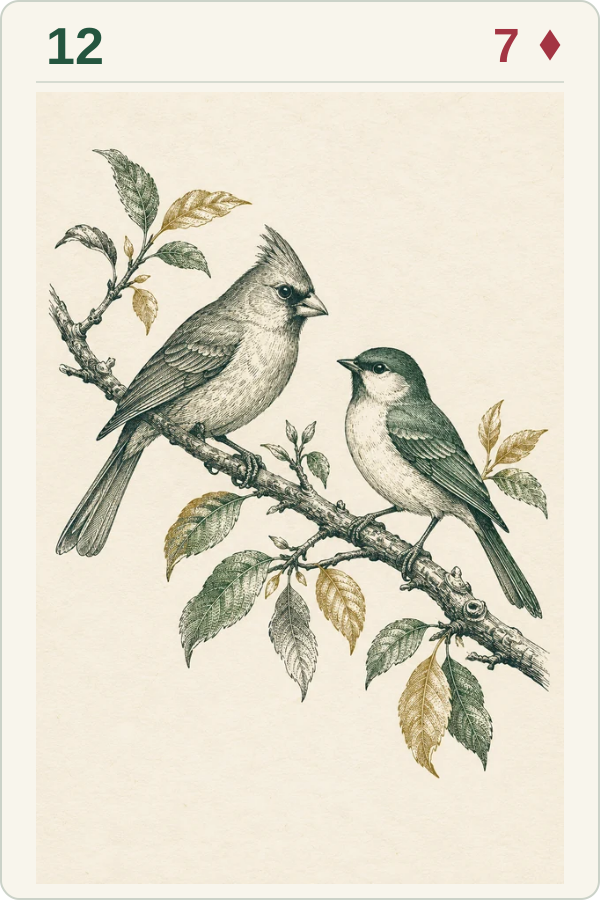
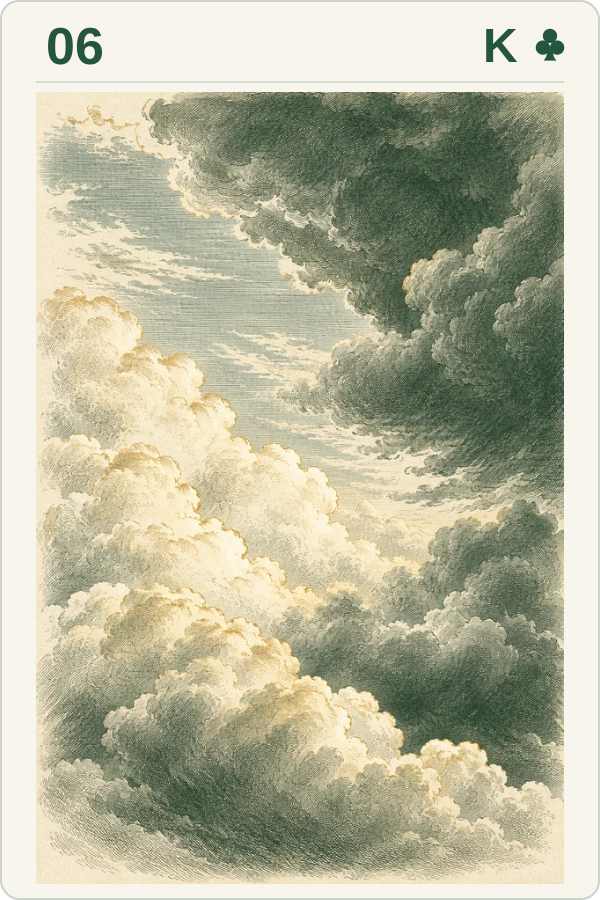
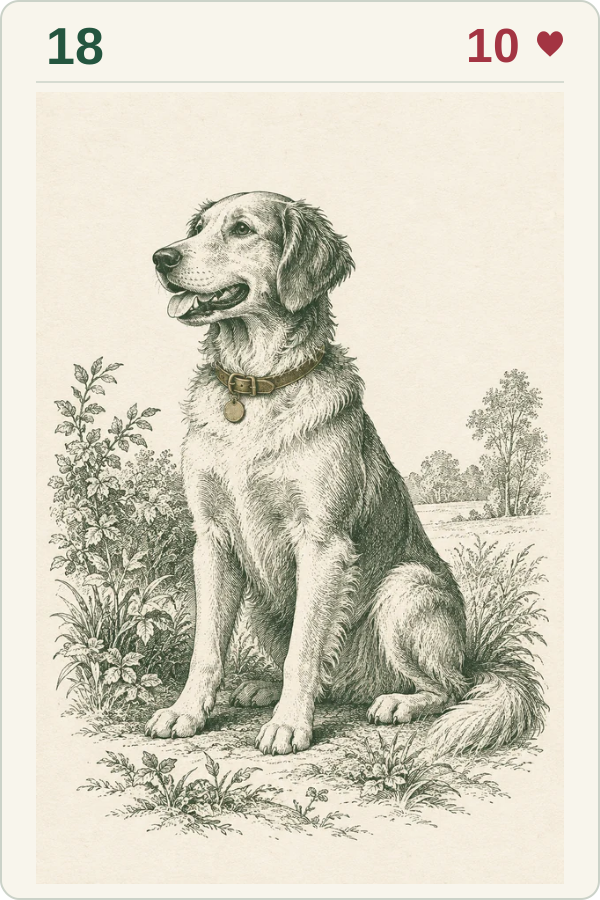
The example grid is Book-Birds-Clouds, Dog-Letter-Bouquet, Mountain-Key-Anchor. Letter in the center makes written communication the organizing theme. The middle row connects friendship, written communication and gratitude within a social circle; the upper row suggests questions or uncertainty around what is known; the lower row invites attention to an obstacle and a way to establish stability.
A bounded synthesis is to make the invitation clear, resolve unanswered questions and confirm the practical arrangements. Check each adjacent pair in the reference before choosing your wording. None of these symbols proves that people are hiding information or that a problem will be solved.
Knight moves: check the geometry
A knight move goes two positions along one axis and one along the perpendicular axis. In a 3 × 3 grid, the center at 5 has no legal knight destinations. It cannot jump to the four corners. From corner 1, the two legal destinations are 6 and 8.
Knighting is an optional way of making additional pairs from legal landing positions. It is easier to demonstrate on a larger rectangular layout. Learn the rows, columns and mirrors first; there is no need to force a knight connection where the geometry does not allow one.