A five-card Lenormand line: center, chain and mirrors
Build a focused reading from four adjacent pairs and two mirrors without losing the central topic.
Five positions in a line
Read adjacent pairs from left to right; then compare 1+5 and 2+4 around the center at 3.
The central theme of this reading.
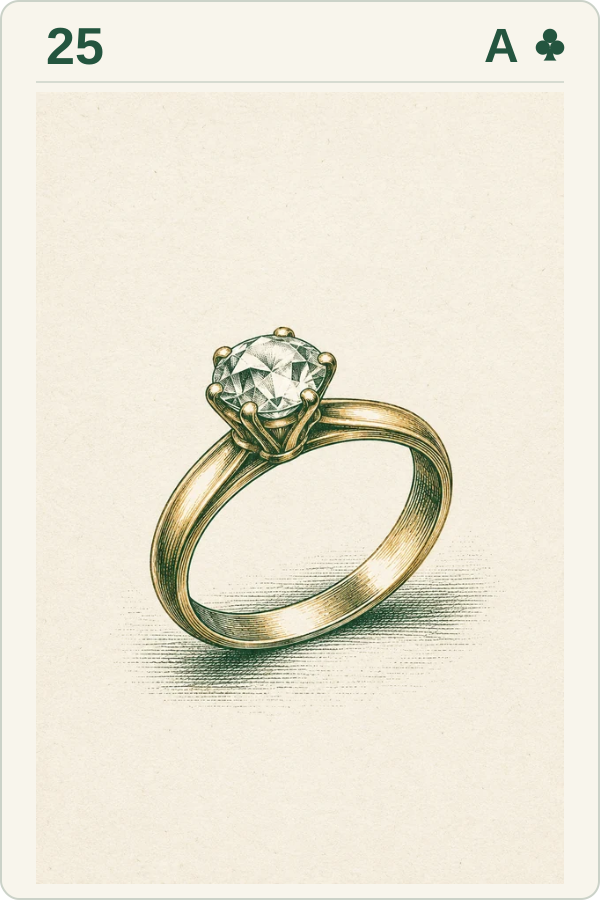
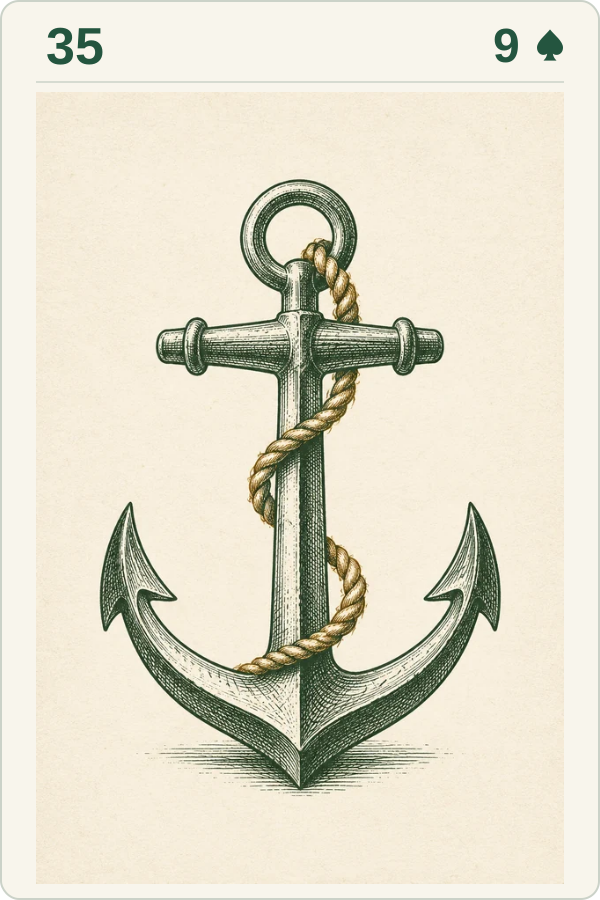
A deliberately selected teaching example. The number beside each card name identifies the card; the layout numbers above identify positions.



Choose a line when you need more detail
A line of five provides more context than three cards while staying focused on one question. Lay the cards out from left to right and identify position 3 before interpreting the whole line. Its symbol gives you a subject to return to when the neighboring pairs suggest several possibilities.
The line shown here is different from a five-card cross. They contain the same number of cards, but their position rules differ. Choose the layout first and keep its rules consistent throughout the exercise.
Chain the adjacent pairs
Read 1+2, 2+3, 3+4 and 4+5 as four short phrases. At each step, return to the current two symbols rather than carrying an elaborate story from the last pair into the next.
Then write a summary that connects the phrases around the center. Not every card needs to describe a different person or event. Several cards may offer different aspects of the same conversation, agreement or obstacle.
Use the two mirrors as checks
Pair the outer positions 1+5, then the inner positions 2+4. These mirrors connect equal distances from the center. They can reinforce a theme or reveal a tension you should keep open.
A mirror is an additional perspective, not a rule that overrules the adjacent sequence. If the readings conflict, record the conflict and consider whether your question was too broad or a keyword was chosen too narrowly.
Worked example: a shared project
Consider Dog, Letter, Ring, Anchor and Sun, with the question: what should be clarified when organizing a shared project? Ring in the center puts an agreement or commitment at the heart of the exercise. The first two pairs connect support with written communication, then written communication with a commitment.
Ring+Anchor highlights stability in a commitment, while Anchor+Sun adds a positive or confident tone to that stability. A study summary could focus on supportive communication, a clear written agreement and consistent follow-through. This does not guarantee the project's success or replace reading the real agreement.
Use Dog+Sun and Letter+Anchor as the two mirrors. Compare their saved meanings with your summary, then list what is already known about the project and what would need to be confirmed outside the cards.
Stop before the story becomes untestable
Keep the final summary shorter than the notes used to reach it. One or two sentences are usually enough for practice. Avoid adding identities, exact dates or motives that the context does not support.
Record the order of all five cards and the specific keywords you used. This makes the reasoning reviewable and helps distinguish learning the vocabulary from remembering only the examples that seemed to fit.